
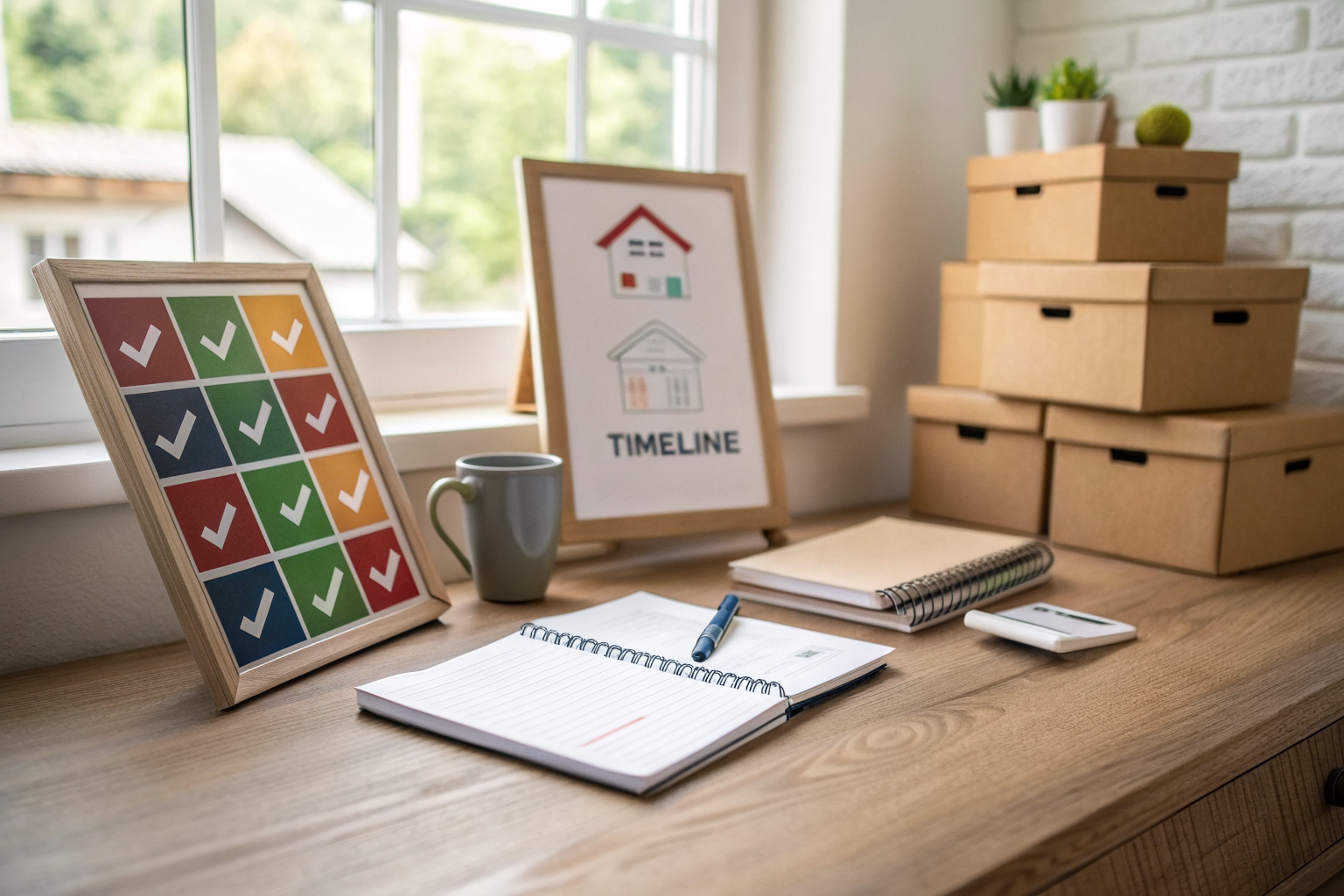
Moving house tips are practical strategies designed to make relocating simpler, cheaper, and less stressful. This advice covers everything from creating a moving timeline and decluttering your home to packing efficiently and managing logistics on moving day. By following proven tips, you can avoid common pitfalls like damaged belongings, unexpected costs, and last-minute chaos, ensuring a smoother transition into your new home.
Key Benefits at a Glance
- Reduce Costs: Save money by decluttering unwanted items before you move, sourcing free boxes, and booking movers during off-peak times.
- Streamline Packing: Systematically pack room-by-room and label every box with its contents and destination to make unpacking significantly faster.
- Minimize Stress: Use a detailed moving checklist and timeline to manage tasks week-by-week, preventing last-minute panic and oversight.
- Protect Valuables: Learn professional techniques for wrapping fragile items, securing electronics, and loading the truck to prevent costly damage.
- Simplify Your First Night: Pack an essentials box with toiletries, chargers, bedding, and snacks so you’re comfortable from the moment you arrive.
Purpose of this guide
This guide is for anyone planning a move, from first-time renters to experienced homeowners feeling the pressure of a relocation. It directly solves the problem of moving-related stress and disorganization by providing a clear, actionable framework. You will learn step-by-step solutions for creating a moving timeline, decluttering effectively to reduce costs, and packing room-by-room for an easier unpacking experience. We’ll also cover critical tasks like choosing a removal company and how to avoid common mistakes, ensuring your transition is smooth, on-budget, and organized from start to finish.
Planning your move: the foundation of a stress-free experience
Moving house ranks among life's most stressful events, but through 15+ relocations, I've discovered that effective planning transforms chaos into a manageable process. The Moving House Process becomes dramatically less overwhelming when you implement systematic Planning strategies that prioritize Time Management and deliver measurable Stress Reduction.
Structure your timeline; download moving house checklist pdf for a comprehensive task list to track your progress.
The cornerstone of successful relocation lies in establishing an 8-week timeline framework that structures every aspect of your move. This methodical approach, refined through multiple relocations, ensures critical tasks receive appropriate lead time while preventing the last-minute panic that characterizes poorly planned moves. Scheduling becomes your most powerful tool for maintaining control throughout the entire process.
- Set your moving date and work backwards
- Create a master checklist with deadlines
- Book removal company immediately
- Start notification process for all services
- Schedule time off work and arrange help
Creating your moving timeline
Breaking down the 8-week timeline into actionable weekly tasks transforms an overwhelming project into manageable chunks. The Checklist serves as your primary organizational tool, tracking progress and ensuring nothing falls through the cracks. Effective Scheduling ensures each task receives adequate lead time, preventing the premium pricing and limited options that plague last-minute arrangements.
Your Calendar becomes the backbone of successful coordination, highlighting critical deadlines for Removal Companies bookings, utility transfers, and service notifications. The most successful moves follow this systematic approach, with each week building upon the previous one's accomplishments.
| Week | Key Tasks | Lead Time Required |
|---|---|---|
| 8 weeks | Research removal companies, get quotes | 4-6 weeks booking |
| 6 weeks | Notify utilities, banks, insurance | 2-4 weeks processing |
| 4 weeks | Book time off work, arrange childcare | 2-3 weeks notice |
| 2 weeks | Confirm all bookings, pack non-essentials | Final confirmations |
| 1 week | Pack essentials box, clean old home | Last-minute prep |
Essential services to notify
The comprehensive notification system ensures no critical services are missed during your transition. Change of Address serves as the foundation of your administrative tasks, requiring 2-4 weeks advance notice for most services. Utilities transfers demand particular attention, as delayed connections can leave you without essential services in your new home.
Post Office mail redirection provides a safety net for missed notifications, while Financial Services require immediate attention to prevent disrupted payments and deliveries. The systematic approach prevents the common oversight of forgotten services that can cause significant inconvenience weeks after your move.
- Financial: Banks, credit cards, insurance companies, pension providers
- Utilities: Gas, electricity, water, internet, phone, TV services
- Government: HMRC, DVLA, electoral register, council tax
- Healthcare: GP, dentist, optician, veterinarian
- Subscriptions: Magazines, gym memberships, delivery services
- Employers: HR department, payroll, company benefits
The benefits of planning ahead
Advance planning delivers tangible benefits that extend far beyond simple organization. Time Management directly correlates with Cost Savings, as early booking secures competitive rates while last-minute arrangements command premium pricing. Efficiency improves dramatically when each task receives adequate attention rather than rushed completion.
Stress Reduction emerges as the primary emotional benefit, transforming moving day from a crisis into a well-orchestrated event. Through multiple relocations, I've witnessed how proper planning prevents the cascade of problems that plague unprepared movers—from damaged belongings due to rushed packing to service interruptions from forgotten notifications.
| Last-Minute Moving | Planned Moving |
|---|---|
| Limited removal company options | Choice of best-rated companies |
| Premium pricing (30-50% higher) | Standard competitive rates |
| Rushed packing = damaged items | Careful packing = minimal damage |
| High stress and anxiety | Manageable, organized process |
| Forgotten notifications | Complete service transfers |
Decluttering before you pack: why less is more
Decluttering represents the most impactful phase of the Moving House Process, directly reducing volume, time, and costs associated with your relocation. This critical step eliminates the expense of transporting items you'll never use while simplifying every subsequent phase of your move. The three-pile sorting system provides a clear decision-making framework that prevents the paralysis of endless deliberation.
Charity Shops and Second-hand Markets offer practical outlets for unwanted items, transforming decluttering from a disposal challenge into an opportunity for both charitable giving and financial recovery. The systematic approach can reduce your packing time by up to 30% while generating funds to offset moving expenses.
- Start with one room and work systematically
- Create three piles: Keep, Donate, Sell
- Apply the one-year rule for unused items
- Take photos of sentimental items you can’t keep
- Schedule charity pickups and list items for sale immediately
Maximizing your donations and sales
Second-hand Markets require platform-specific strategies to maximize returns on your unwanted items. Facebook Marketplace excels for furniture and appliances requiring local pickup, while eBay suits collectibles and branded electronics with broader appeal. Charity Shops provide convenient disposal for items unsuitable for sale, with many offering furniture pickup services that eliminate transportation challenges.
Timeline considerations prove crucial for successful sales and donations. Items requiring shipment need 2-3 weeks for listing, selling, and dispatch, while local pickup items can move within days. Donations offer immediate relief, with same-day collection available for most household items.
| Platform | Best For | Timeline |
|---|---|---|
| Facebook Marketplace | Furniture, appliances, local pickup | 1-2 weeks |
| eBay | Collectibles, electronics, branded items | 2-3 weeks |
| Gumtree | Large items, quick local sales | 1 week |
| Charity shops | Clothing, books, small household items | Same day pickup |
| British Heart Foundation | Furniture collection service | 1-2 weeks notice |
Start with a clear-out
The systematic evaluation method for Decluttering relies on practical decision-making questions that eliminate emotional attachment from the process. The one-year rule provides clear guidance: items unused for twelve months rarely justify the cost and effort of relocation. Minimalism principles support this approach, emphasizing that possessions should add value to your life rather than burden your move.
Common regrets include moving books never reread, clothes that no longer fit, and exercise equipment gathering dust. The evaluation framework prevents these costly mistakes by applying consistent criteria to every item. Photography preserves memories of sentimental items you cannot practically keep, providing emotional closure without physical burden.
Measuring up: ensuring everything fits in your new home
Measuring both Furniture and new home spaces prevents the moving day disaster of discovering your sofa won't fit through the doorway. This critical preparation phase requires systematic measurement of large items, doorways, staircases, and intended placement areas. Home Measurement creates a detailed record that guides both packing decisions and room arrangement.
Floor Planning transforms measurements into practical layout decisions, preventing the need to rearrange heavy items after delivery. Interior Design principles inform optimal placement decisions, ensuring your furniture arrangement enhances rather than restricts your new living space. The systematic recording approach eliminates guesswork and prevents costly mistakes.
Professional movers encounter furniture-fitting problems regularly, with narrow staircases and doorways creating the most common challenges. Pre-measuring prevents these issues while allowing time to arrange professional disassembly services when required. The small investment of measurement time prevents significant moving day complications.
Packing strategies that save time and prevent damage
Professional packing methodologies, refined through 15+ relocations, transform the overwhelming task of protecting your belongings into a systematic process. Packing Supplies serve as the foundation for damage prevention, while proper Packaging Materials ensure items arrive in identical condition. Fragile Items demand specialized attention, but systematic protection methods prevent the heartbreak of discovering damaged treasures.
Learn proper techniques; read how to pack boxes for moving for detailed packing methodology.
Efficiency emerges through proven techniques that simultaneously save time and improve protection. The room-by-room approach maintains organization while preventing the chaos of mixed-origin boxes. Strategic packing sequences ensure heavy items form stable bases while delicate items receive maximum protection.
- Pack one room at a time to maintain organization
- Use clothes and linens as padding for fragile items
- Fill empty spaces in boxes to prevent shifting
- Keep box weight under 50lbs for safe lifting
- Pack a ‘first day’ box with immediate necessities
Essential packing supplies and where to find them
Packing Supplies requirements scale predictably with home size, allowing accurate quantity estimation that prevents mid-packing supply runs. Cardboard Boxes form the foundation, with standard and large sizes handling different item categories. Bubble Wrap protects fragile items, while Packing Paper provides versatile wrapping and void filling. Quality Tape ensures box integrity, and permanent Markers enable clear labeling.
Sourcing strategies range from commercial suppliers offering complete packages to creative alternatives like liquor stores for sturdy boxes. The investment in quality supplies pays dividends through reduced damage rates and improved handling efficiency. Quantity formulas based on room count provide accurate purchasing guidance.
| Home Size | Standard Boxes | Large Boxes | Bubble Wrap | Tape Rolls |
|---|---|---|---|---|
| 1 bedroom | 15-25 | 5-10 | 1 roll | 3-4 |
| 2 bedroom | 25-40 | 10-15 | 2 rolls | 5-6 |
| 3 bedroom | 40-60 | 15-20 | 3 rolls | 7-8 |
| 4+ bedroom | 60-80 | 20-25 | 4+ rolls | 10+ |
Reduce costs on materials; see free cardboard boxes for moving to source boxes without spending money.
Box types and their uses
Cardboard Boxes vary significantly in strength and application, with double-walled versions providing superior protection for heavy items. Standard boxes suit books and small household items, while large boxes accommodate light, bulky items like bedding and clothing. Dish pack boxes feature internal dividers specifically designed for Glassware protection.
Wardrobe boxes revolutionize clothing transport, allowing garments to hang during the move and arrive wrinkle-free. These specialty boxes justify their premium cost through time savings and garment protection. Storage Solutions principles guide box selection, matching container strength to contents while optimizing space utilization.
Room-by-room packing guide
Room-specific packing addresses the unique challenges each space presents. Kitchen Utensils require careful wrapping and strategic weight distribution, while Electronics demand anti-static protection and cable management. Furniture often needs disassembly with hardware carefully bagged and labeled. Textiles offer packing flexibility, serving as padding while requiring protection from moisture.
Appliances present particular challenges, requiring thorough cleaning, secure positioning, and often professional disconnection. Each room category demands specific techniques developed through experience with various item types and their vulnerability to damage.
- Kitchen: Wrap dishes individually, pack heavy items in small boxes, empty and defrost appliances 24 hours before
- Bedroom: Use wardrobe boxes for hanging clothes, vacuum-pack bedding, disassemble furniture and bag hardware
- Bathroom: Use plastic bags for toiletries, pack medicines separately, clean and dry everything thoroughly
- Living room: Wrap electronics in original boxes when possible, photograph cable setups, protect furniture corners
Protecting valuable and fragile items
Fragile Items demand specialized protection techniques that go beyond standard bubble wrap. Glassware requires individual wrapping with dish dividers preventing contact damage. Electronics benefit from original packaging when available, or anti-static materials and firm cushioning. Artwork needs corner protectors and flat transport, while Antiques often require custom solutions addressing their specific vulnerabilities.
Valuables consideration extends beyond packing to insurance documentation and personal transport decisions. High-value items may warrant professional packing services or personal transportation rather than inclusion with household goods.
“Take a video of your home contents before you start packing. This will help you determine later if anything is lost or damaged in the move.”
— NerdWallet, 2025
Source link
Handle delicate and fragile items with extra care
Glass and Crystal items require multi-layer wrapping with tissue paper, bubble wrap, and firm cushioning in appropriately sized boxes. Porcelain benefits from individual wrapping with padding between pieces to prevent contact damage. Fine Art demands climate consideration during transport, with temperature-stable packing materials and moisture protection.
Picture Frames need corner protection and flat positioning to prevent glass breakage and frame distortion. Specialized materials like foam protectors and corner guards provide superior protection compared to improvised padding. The investment in proper materials prevents irreplaceable losses.
Moving items vertically
Television and Mirrors must be transported vertically to prevent screen damage and glass breakage. The physics of horizontal transport creates pressure points that crack LCD Screens and stress mirror backing. Picture Frames with Glass faces similarly require vertical positioning during transport.
This vertical transport principle applies universally to flat items with fragile surfaces. Professional movers use specialized blankets and positioning techniques to maintain vertical orientation throughout the journey. Understanding this requirement prevents costly damage to expensive electronics and irreplaceable artwork.
Labeling systems that make unpacking a breeze
Comprehensive labeling transforms unpacking from chaos into organized efficiency. Organization principles guide the development of systematic approaches that evolved from basic room labels to sophisticated priority coding. Color Coding provides immediate visual identification, with room-specific colors enabling quick box routing upon delivery.
Inventory Systems track high-value items and create master lists for verification. The labeling evolution through multiple moves demonstrates how simple systems become sophisticated organizational tools. Advanced labels include room destination, general contents, priority level, and handling instructions.
Effective labels serve multiple purposes: guiding movers during loading, directing placement in the new home, and informing unpacking priorities. The systematic approach prevents the common frustration of searching through multiple boxes for essential items. Clear, detailed labeling saves hours during the unpacking process.
Moving day essentials: what to keep within reach
The Essentials box concept prevents major inconvenience during the transition period when most belongings remain packed. This Survival Kit contains everything needed for the first 24-48 hours in your new home. Personal Care Products ensure basic hygiene needs are met, while important documents remain accessible for immediate needs.
Understand the day’s workflow; review what happens on moving day to prepare for each stage of the process.
The survival kit prevents the frustration of searching through multiple boxes for basic necessities. Items like phone chargers, basic tools, cleaning supplies, and first-night comfort items transform the first day from survival mode into manageable settling-in. Strategic packing ensures these items remain accessible throughout the moving process.
- Personal care: Toiletries, medications, change of clothes, towels
- Technology: Phone chargers, laptop, important cables, torch
- Documents: Moving contracts, insurance papers, ID, new home keys
- Comfort: Snacks, drinks, tea/coffee supplies, basic first aid kit
- Tools: Screwdriver set, scissors, box cutter, cleaning supplies
Managing food and meals during your move
Food Preparation strategy for the transition requires gradual Refrigerator and Freezer emptying starting 1-2 weeks before moving day. This timeline prevents food waste while ensuring you're not left without meals during the chaotic moving period. Meal planning focuses on using perishables and avoiding Grocery Shopping that creates additional items to pack or waste.
Easy meals using pantry staples become essential during the final week when kitchen items are being packed. Keeping basic cooking items accessible until the last day ensures you can prepare simple meals without relying entirely on takeaways. The systematic approach balances practicality with nutrition during the stressful moving period.
For seasonal moves, plan ahead; if moving house at christmas, account for holiday closures and limited services.
Loading strategy: last in, first out
Logistics principles guide strategic loading of Moving Vehicles to ensure essential items remain accessible. The Transportation sequence follows a specific pattern: heavy furniture loads first for stability, followed by standard boxes, with essentials boxes loaded last for immediate accessibility. This systematic approach prevents the need to unload the entire truck to access critical items.
Moving Vehicles packing requires three-dimensional thinking, with weight distribution and accessibility both factoring into loading decisions. Professional movers understand these principles, but self-movers benefit from applying the same logical sequence. Proper loading order significantly simplifies the unpacking process and prevents damage from shifting loads.
Working with professional movers: how to get the most value
Selecting and working effectively with Removal Companies and Moving Companies requires understanding Service Industry standards and communication strategies. The vetting process focuses on insurance coverage, experience, equipment quality, and pricing transparency. Customer Service quality often correlates with overall moving experience satisfaction.
Time your booking correctly; check when to book removal company to secure best rates and availability.
Moving Industry certifications and trade association memberships provide credibility indicators, while recent customer references offer real-world performance insights. Clear communication about expectations, special requirements, and timeline constraints prevents misunderstandings that can compromise service quality.
- Are you fully insured and what does your coverage include?
- How many years have you been in business locally?
- Can you provide recent customer references?
- What happens if items are damaged during the move?
- Do you charge extra for stairs, long carries, or assembly?
- What is your cancellation and rescheduling policy?
- Are you members of BAR or other trade associations?
- Will the same crew handle loading and unloading?
- How do you protect floors and walls during the move?
- What payment methods do you accept and when is payment due?
Proper lifting techniques: protecting yourself during the move
Correct Manual Handling methods prevent Back Injury Prevention through proper Ergonomics application. The fundamental principle involves bending knees rather than the back, keeping lifted items close to your body, and avoiding twisting motions while carrying weight. Physical Health protection requires recognizing personal limitations and using mechanical aids when appropriate.
Professional lifting techniques emphasize team lifting for items exceeding individual capacity, with clear communication ensuring coordinated effort. Proper body mechanics prevent the acute injuries and cumulative strain that can result from improper lifting during the physically demanding moving process. Understanding when to seek help or use tools prevents unnecessary injury risk.
Navigating stairs and tight spaces
Staircases present the greatest challenge for safe furniture movement, requiring specific techniques for both ascending and descending with heavy items. Safety Procedures mandate the use of spotters, frequent rest breaks, and clear communication between team members. Interior Architecture challenges like narrow hallways and low ceilings demand advance planning and often creative solutions.
Furniture protection during tight space navigation requires corner guards, furniture blankets, and sometimes partial disassembly. The combination of safety and property protection requires systematic approaches developed through experience with challenging moves. Professional techniques prevent both injury and damage during complex navigation situations.
Setting up your new home: a methodical approach
Systematic Home Organization transforms unpacking from overwhelming chaos into manageable progress. The methodical approach prioritizes essential spaces—bedroom, bathroom, and kitchen—ensuring basic functionality before addressing less critical areas. Interior Design considerations inform furniture placement decisions, while Household Management principles establish organizational systems from day one.
The room-by-room sequence reflects practical priorities: sleeping arrangements for the first night, basic hygiene facilities, and food preparation capabilities. This foundation enables normal daily routines while the remaining unpacking continues at a comfortable pace.
- Day 1: Set up bedroom and bathroom essentials
- Day 2: Unpack kitchen basics and verify utilities
- Day 3: Arrange main living areas and test all systems
- Day 4: Tackle remaining boxes room by room
- Day 5: Hang pictures and arrange decorative items
- Day 6: Organize storage areas and wardrobes
- Day 7: Complete setup and enjoy your new home
First-week priorities in your new home
Critical first-week tasks establish safety, functionality, and connectivity in your new home. Home Security setup begins with changing locks and testing alarm systems, ensuring your safety from day one. Utilities verification confirms all services function properly, while Internet Services activation maintains connectivity for work and communication needs.
Home Cleaning may be necessary if not completed before arrival, while safety orientation includes locating circuit breakers, water shut-offs, and emergency contact information. These foundation tasks enable comfortable living while remaining unpacking continues.
- Security: Change locks, test smoke alarms, locate circuit breaker
- Utilities: Verify gas, electric, water pressure, heating system
- Connectivity: Set up internet, test phone signal, update address with services
- Safety: Locate nearest hospital, pharmacy, police station
- Cleaning: Deep clean before unpacking, check for any damage to report
Furniture assembly and placement
Furniture Assembly requires systematic tracking of instructions and hardware to prevent confusion and lost components. Essential Tools include screwdrivers, Allen keys, and rubber mallets, with cordless drills significantly speeding assembly time. Interior Design principles guide placement decisions, considering traffic flow, natural light, and room proportions.
Home Organization benefits from thoughtful furniture positioning that supports daily routines and maintains clear pathways. The assembly sequence considers room priorities and access requirements, with bedroom furniture taking precedence for immediate sleeping arrangements.
Special considerations: pets, plants, and valuables
Pets require special preparation to minimize stress during the moving process. Pet Transportation involves familiar carriers, comfort items, and maintaining routines as much as possible. Houseplants need careful Plant Care during transport, including proper watering schedules, temperature protection, and pruning to prevent damage.
Valuables decisions involve choosing between personal transport and professional moving services, with insurance considerations and documentation requirements varying by value and fragility. High-value items often warrant personal transportation to maintain control and immediate access to insurance documentation.
Family moves need extra care; read moving house with kids for specific strategies when children are involved.
Managing clothing and textiles
Clothing packing strategies maximize space efficiency while maintaining organization. Wardrobe boxes accommodate hanging items without wrapping, while folded clothes pack efficiently in standard boxes. Textiles like bedding and linens serve dual purposes as padding material for fragile items while requiring protection from moisture and soiling.
Storage Solutions for clothing include vacuum bags for bulky items, with the space savings particularly valuable for long-distance moves. The systematic approach ensures matching sets stay together while seasonal items receive appropriate priority for unpacking.
Common moving mistakes and how to avoid them
Frequent mistakes emerge from inadequate planning, insufficient preparation, and underestimating time requirements. Problem Solving approaches prevent these issues through systematic preparation and realistic timeline estimation. Risk Management identifies potential failure points and establishes contingency plans.
Planning Errors typically involve underestimating packing time, inadequate supply quantities, poor labeling systems, and forgotten service notifications. Learning from these common mistakes prevents costly delays and complications that can derail even well-intentioned moving plans.
- Underestimating packing time – start 2 weeks earlier than planned
- Not decluttering first – you’ll pay to move items you don’t need
- Poor labeling system – leads to chaos during unpacking
- Inadequate packing supplies – results in damaged belongings
- Forgetting to notify services – causes billing and delivery issues
- Not taking photos of valuable items – complicates insurance claims
- Packing cleaning supplies with other items – creates safety hazards
- Not keeping important documents with you – causes access problems
- Booking movers too late – limits options and increases costs
- Not having a backup plan – leaves you stranded if issues arise
Settling in: making your new house feel like home
Psychological Well-being during transition benefits from strategies that quickly establish familiarity and comfort in your new environment. Home Decor decisions focus on unpacking personal items first, hanging family photos early, and arranging familiar spaces that provide emotional anchoring during the adjustment period.
Community Integration accelerates the settling-in process through meeting neighbors, exploring local services, and establishing new routines. The combination of creating physical comfort within your home and building connections within your community supports successful transition to your new location. Both practical and emotional aspects contribute to transforming a new house into your home.
Frequently Asked Questions
The time required for packing to move house varies based on home size and belongings, typically taking 1-2 days for a small apartment and up to a week for a larger house. Factoring in tasks like sorting clothes, where you might need to know how to measure waist for men to organize pants properly, can add time. Start early and enlist help to streamline the process.
Before moving house, declutter your items, notify utilities and update your address with banks and services. Book movers or rental vehicles in advance and prepare a packing plan. Creating a timeline ensures everything runs smoothly without last-minute stress.
Wrap fragile items individually with bubble wrap or packing paper, and use sturdy boxes filled with cushioning like foam peanuts to absorb shocks. Label boxes clearly as “fragile” and avoid stacking heavy items on top. For best results, pack in layers and secure everything tightly to minimize movement during transport.
A first night kit should contain essentials like toiletries, medications, a change of clothes, bedding, and basic kitchen supplies for immediate comfort. Include important documents, chargers, snacks, and any tools needed for quick setups. This kit helps you settle in without digging through all your boxes right away.
Begin by categorizing tasks such as packing, utilities transfer, and address changes, then assign deadlines like starting four weeks in advance. Include specific items like inventorying belongings or arranging pet care. Review and update the checklist regularly to cover all aspects of your move.